
Wednesday, January 1, 2020
10 Simple Tips To Make You Eat Less - How To Reach Your Goals - And Keep Them

Nourish the brain and eat less
It doesn't have to be that hard to eat less and healthier. With 10 simple tips, you can trick your brain and senses so you hardly notice the difference in portion size.
10 simple tips to make you eat less
You use all your senses when you eat, and with the help of small tricks you can manipulate them to eat less and healthier without feeling like you are causing anything. We have asked a renowned expert on the new science of neurogastronomy and been given 10 tips on how to deceive the senses.
10 simple tips
1. Select the correct dish
You may not have thought so carefully about how the appearance of the plate affects how you do. But the fact is that it may pay off to eat off a smaller plate than you usually do. A serving of food on a small plate will look bigger, and it lures the brain to believe that there is more food on the plate than it really is. That way you less than you would otherwise. If you really want to put in the punch, you can serve the food on a red plate. Studies have shown that we eat less if the dish is served on a red background. This is because the brain automatically has an aversion to the red color. The plate color also has significance in another area. If you serve food on round, white plates, you will perceive the food as 10 percent sweeter than if the same dish is served on a square, black plate. It allows you to do.
2. Avoid loud music and background noise
Avoid eating in restaurants or places where there is a lot of background noise. Many restaurants play music over 100 dB, and such a noise level will actually reduce the ability to taste salty and sweet.
In return, listening to slow music while eating is good. The slower the music, the more time you spend lifting the fork or glass to your mouth. That way you eat less, because it is easier to feel when you are saturated if you eat slowly.
3. Solid food is best
The easier it is to get food or drink, the more we eat or drink it. You use your mouth's sensory as an indicator of how much you have eaten and when to stop. That is why you gain far more calories when you drink apple juice than when you eat e.g. applesauce. Obviously fewer calories are consumed by eating an apple.

You consume less if you eat the apple, rather than drinking it in a juice. © iStock
4. Taste the food properly
Try to notice every little taste impression from spices and ingredients that hit the taste buds. By paying more attention to what you eat, you will probably eat less and get more out of your taste and composition. Think of it as so-called mindful eating.
5. Turn off the TV
Surveys show that we get around 33 percent more if we watch TV while we eat. We are so engrossed by the television program that we think far less about how much we really put in our mouths.
6. Remove temptations
Do not have food standing in front. Transparent plastic containers, glass jars and cabinets with a transparent door are more difficult to resist than if you hide food well away in cabinets, drawers and containers you cannot see through. Then the urge to eat is not stimulated by visible temptations every time you are in the kitchen.
7. Hold the bowl in your hand
Instead of putting the plate or dish on the table, hold it in your hand as you eat. Choose a heavy dish or dish, because the weight will convince the brain that you are fed up with eating what is in it.
8. Eat with sticks
If you are not used to eating with sticks or rarely do it, it's time to learn it. This is because there is every reason to put the fork away: It is probably more difficult to get the food, and it means that you eat smaller portions. You will also eat slower, and it is far healthier than pulling into rocket speed. If you feel it is too demanding to eat with sticks, try to make it harder for yourself by holding the fork in the "wrong" hand when eating. The more cumbersome it is to get the food into your mouth, the better!
9. Small is good
Try serving soup from a smaller saucepan with a smaller spoon, and eat the dish with less spoons than you usually do. You will feel that you are eating more than you really do.
10. Blue makes you feel less
The color blue can reduce the food intake. During the Depression in the poor 30s, restaurant owners found that they could save money by serving the food of blue barrels - it made the guests feel less satisfied.
Tuesday, November 5, 2019
Eat healthier, lower quality of life
Almost regardless of which newspaper or online magazine you read today, you are bombarded with various dietary tips. Either it is these "super-healthy" foods that you should eat more of, or they are often the "dangerous" foods you should eat less of, and sometimes you want to cut out completely. But, who is really right, and what does the word really mean?
EAT YOURS AND AVOID THAT
It's no wonder you get confused when one week you can read that carrots are carcinogenic and should therefore be avoided, before we can read in the same newspaper, just the week after, that we need to eat more carrots. Why? Yes, because it is probably good for you.
How often have you not heard this: "If you are going to lose weight, you have to cut out all your favorite foods, and at least gluten, pizza and chocolate"? I tear my hair every single time I hear this. It is, in fact, completely misleading and very, very wrong.
In my job as a personal trainer and dietitian, I guide and coach people with different conditions, desires and needs on a daily basis. Some of them have a goal of losing weight, and guess what? They eat both gluten, pizza and chocolate, AND they lose weight. They do not eat it every day, and not a 200 gram chocolate plate every time. But a little sometimes, and in moderate amounts.

HEALTHY OR UNUSED - FOR WHO?
What is known as "healthy" and "clean" food largely depends on who you ask, and not least who is going to eat the food.
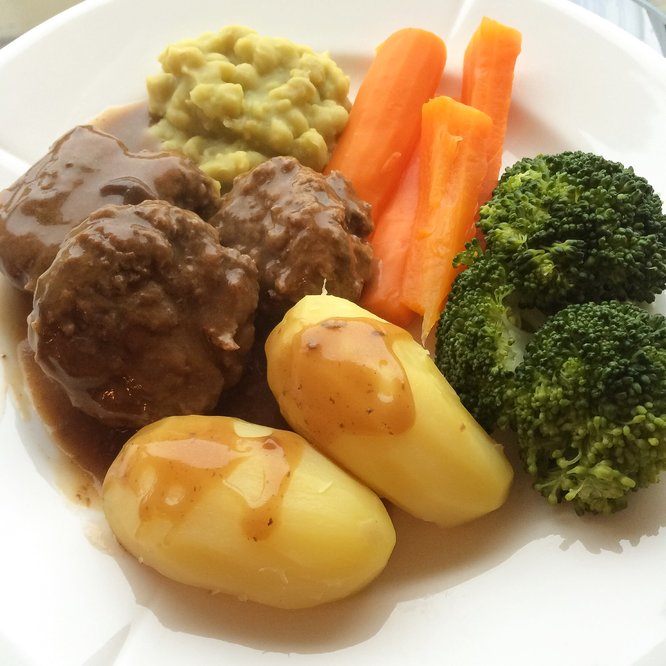
If you ask a low-carb guru about which foods to stay away from, the answer would undoubtedly have been carbohydrates and sugars. If you ask a vegan about the same, he or she might have listed twenty different reasons as to why exactly you should stay away from all animal products. you ask a fitness practitioner if your mom's homemade meatballs are healthy, he or she will most likely be able to roll his eyes at the same time as he or she pulls in a packet of rice cakes. And so it goes.
The idea of classifying foods as healthy or unhealthy is basically irrational, and often (read: almost always) lacks scientific evidence to substantiate this.
INDIVIDUAL DIFFERENCES
There are also great individual differences between us humans. Something that is "healthy" for one person does not necessarily have to be "healthy" for another. Take, for example, an athlete who practices several hours a day, and therefore needs quick nutrition between sessions. Then maybe a sugary sports drink may be just what it takes. But, for an obese, inactive person with type 2 diabetes, maybe that sports drink is not "healthy" anyway?
I get a lot of questions every day about what is best for you and what, and what is most optimal to either eat or exercise. The answer is almost always the same: "it depends". One has to look at the whole picture. Not just the exercise and the diet, but life in general. After all, don't forget that exercise and diet have to be adapted to it after all.
THE DANGEROUS GLUTENET
It has almost become "in" to have gluten allergy at the moment, but is it really that it's gluten's fault that we keep getting fatter and fatter?
Of course, there are some groups of people who should avoid certain types of food due to medical reasons. This applies, for example, to those who have been diagnosed with celiac disease, who must then avoid gluten-containing foods. However, this applies to a very small percentage of the population. It does NOT apply to Aunt Magda at 50, who has found out she gets fat from the two gluten-containing bread slices she eats for breakfast, but forgets that she eats over 1 kg of chocolate on the weekends, with gluten. Often, foods without gluten will contain MORE calories than similar foods with gluten will do. So, if you are healthy and can withstand gluten, there is actually very little reason to cut it out.
EAT SMART - FOOD JOY
Having a "healthy" diet does not necessarily have to be rocket research, and unfortunately I think we tend to complicate it too much. In order to have a so-called "healthy" diet, the food should be varied, contain well with vitamins and minerals, and that you get the amount of food your body needs. Depending on, among other things, goals and activity level.
Eat foods you like, and please do not force yourself into a box of cottage cheese, which you cannot really demand, because some nutritionist has said that you need it to lose weight. You should also not eat spirulina for every meal, nor starve yourself five days a week, and then eat the other two. Do you get lucky in your soul of the one sliced slice of Nugatti for Saturday breakfast? Well, then you eat one slice, and then life goes on.
AVSLUTNIGNSVIS
So, can we really conclude something here? One thing that almost all so-called "experts" agree on is that vegetables are good for you.
In fact, you don't automatically become fat from carbohydrates, or sugar. You also don't automatically get fat from eating fat, or the one chocolate you treat on Saturday night. You become fat from too much food over time. I would also dare to say that some of what matters most in being able to say whether something is healthy or unhealthy is just the amount. You can get fat from the chicken fillet too, you just have to eat enough of it.